Ingredients6 min readBy Marco Buchegger
Acetyl Hexapeptide-8: the INCI name behind Argireline
Acetyl Hexapeptide-8 appears on every second anti-aging INCI list. Here is what the molecule does — and what it cannot do.
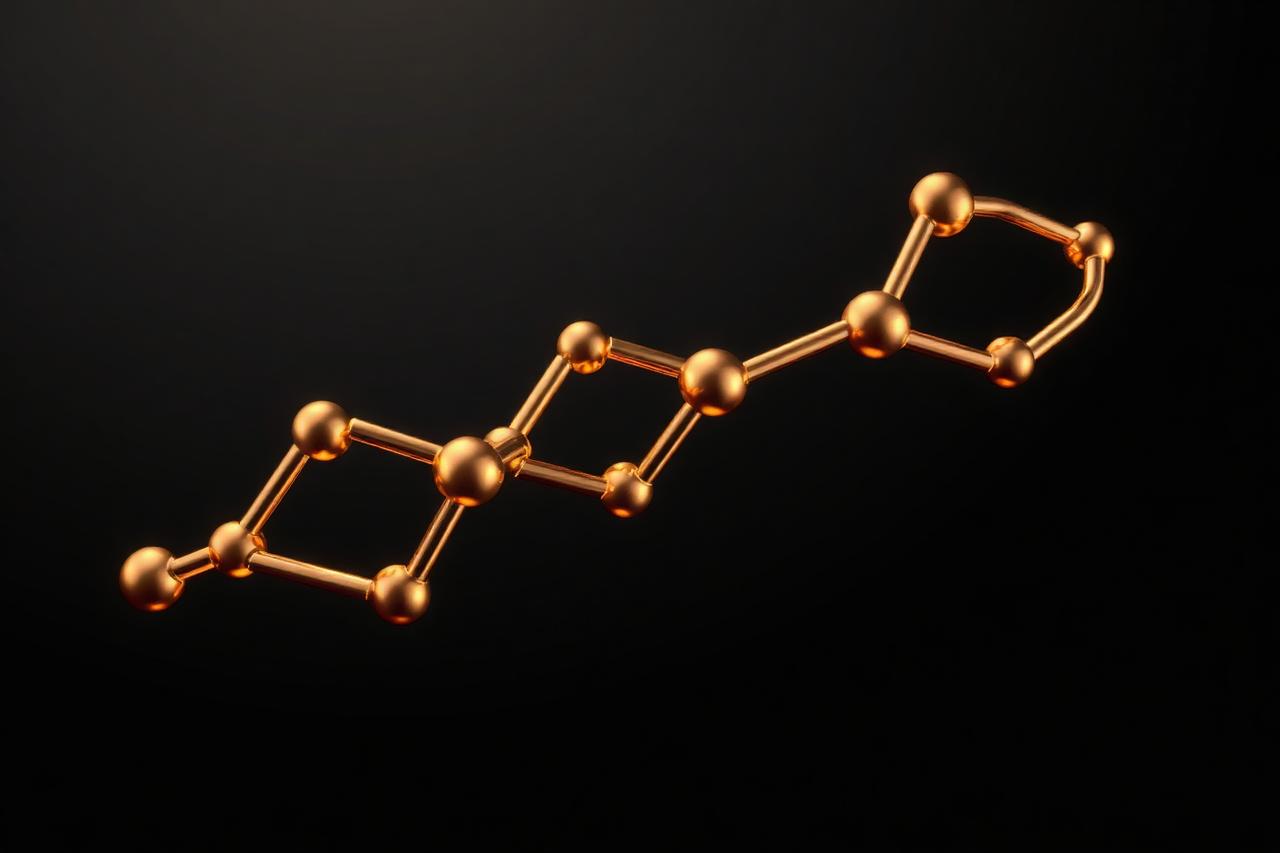
When an ingredient list shows Acetyl Hexapeptide-8, it means exactly the active that marketing calls Argireline. INCI name and trade name describe the same hexapeptide — a chain of six amino acids.
How it works
Expression lines form because muscle fibres receive a contraction signal through the SNARE complex. Acetyl Hexapeptide-8 mimics part of that complex and weakens the signal. The result: superficial muscle tension drops and skin folds less sharply.
Acetyl Hexapeptide-8 vs Botox
| Criterion | Acetyl Hexapeptide-8 | Botulinum toxin |
|---|---|---|
| Application | Topical serum | Injection by a doctor |
| Depth | Superficial muscle fibres | Neuromuscular junction |
| Visible effect | After about 28 days | After 3 to 7 days |
| Reversible | Immediately on stopping | After 3 to 6 months |
| Risk | Very low, cosmetic | Medical procedure |
For realistic expectations: the peptide does not replace an injection. It smooths fine expression lines on the forehead and eye area, but it paralyses nothing.
Is Acetyl Hexapeptide-8 harmful?
No — on current evidence it is considered cosmetically well tolerated. It acts only in the upper skin layers, is not absorbed into the bloodstream and is approved as a cosmetic ingredient in the EU. Irritation almost always comes from other parts of a formula, not from the peptide itself.
- No photosensitivity: unlike retinol, the peptide does not make skin sun-sensitive.
- No dependency: stop using it and expression simply returns to its starting point.
- No known concerns in pregnancy or breastfeeding, but still check with your midwife or doctor.
- With very sensitive skin, patch test on the forearm for 24 hours first.
Where it works – and where it does not
- Well: fine frown lines, forehead lines, crow's feet around the eyes.
- Partly: nasolabial folds while they are still mostly movement-driven.
- Barely: deep structural folds and volume loss in the cheeks.
- Not at all: pigment spots, pores or acne — those need different actives.
Sensible concentration and pairing
- Study-typical dose: 5 to 10 percent active solution in the finished product.
- Best pairing: with GHK-Cu, because one relaxes expression while the other rebuilds collagen.
- Apply at night, two to three drops on cleansed skin.
That exact pairing sits in the LIORA GHK-Cu Korean Gold Serum: copper peptide for structure, hexapeptide for expression lines.
See the hexapeptide serumFrequently asked questions
- What is Acetyl Hexapeptide-8?
- Acetyl Hexapeptide-8 is the INCI name of a six amino acid peptide known commercially as Argireline. It dampens signal transmission at superficial muscle fibres and thereby softens expression lines.
- Is Acetyl Hexapeptide-8 the same as Argireline?
- Yes. Argireline is the trade name and Acetyl Hexapeptide-8 the INCI name of the same active.
- How long does Acetyl Hexapeptide-8 take to work?
- Studies measure the clearest change in wrinkle depth after roughly 28 days of daily use.
- Does Acetyl Hexapeptide-8 replace Botox?
- No. It works topically and far more gently than an injection. It smooths fine expression lines but does not paralyse muscle.
- Is Acetyl Hexapeptide-8 harmful?
- No. It works only superficially, is not absorbed into the bloodstream and is approved as a cosmetic ingredient in the EU. Irritation usually comes from other parts of the formula.
- Does Acetyl Hexapeptide-8 make skin sun-sensitive?
- No. Unlike retinol the peptide does not increase photosensitivity. Daily sunscreen still remains the most important anti-aging step.
Topics
- Acetyl Hexapeptide-8
- Argireline
- Expression lines
- Peptides
Keep reading
More articles
- Argireline serum: what the peptide can and cannot do
- Anti-aging peptides: the four classes and what they do
EDNF25070922 combines GHK-Cu, bio microneedling, the 5-peptide complex and 24K gold in a single serum.
View the serum