Ingredients6 min readBy Marco Buchegger
Copper peptide benefits: what they actually trigger in skin
Copper peptides are the best tolerated anti-aging signal in dermatology. Here is what they trigger in the dermis — and on what timeline.
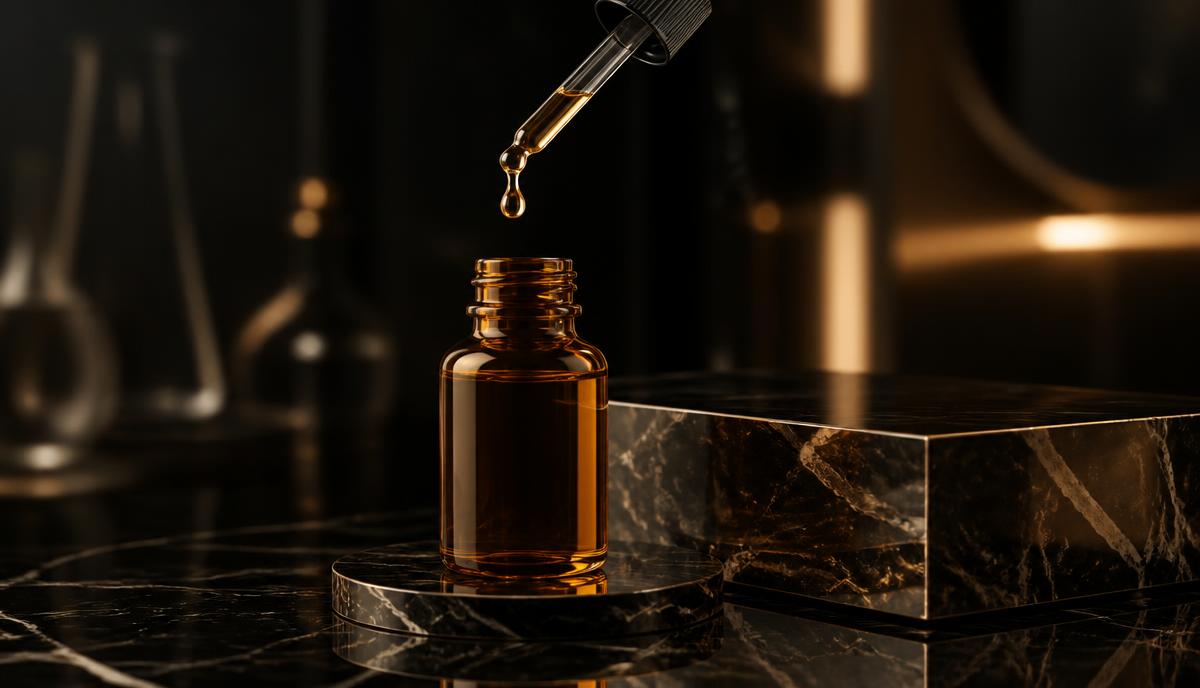
Copper peptides are short amino acid chains that bind copper ions and carry them into the dermis. The best studied is GHK-Cu, a tripeptide naturally present in blood plasma.
The four documented effects
- Collagen and elastin synthesis: fibroblasts are activated, the dermis densifies.
- Breakdown brake: matrix metalloproteinases are down-regulated.
- Barrier: more endogenous hyaluronic acid and glycosaminoglycans.
- Antioxidant: free radicals from UV and pollution are neutralised.
How fast do copper peptides work?
Day 1 to 14: more even texture and better water binding. Week 4 to 8: visibly more elasticity. From week 8: structural remodelling — flatter lines, not just a better surface.
How to apply them
Two to three drops at night on cleansed skin. Separate high-dose vitamin C by time of day. See the full mechanism in the LIORA GHK-Cu Korean Gold Serum.
See the GHK-Cu serumFrequently asked questions
- What do copper peptides do for skin?
- They deliver copper ions into the dermis, activate fibroblasts to build collagen I and III, and slow the enzymes that degrade collagen.
- How long do copper peptides take to work?
- Texture and hydration usually improve within 14 days. Structural effects on wrinkle depth need 8 to 12 weeks of consistent use.
- Are copper peptides gentler than retinol?
- Generally yes. Copper peptides cause no retinisation, no flaking and no photosensitivity, which makes them suitable for sensitive skin.
Topics
- Copper peptides
- GHK-Cu
- Collagen
- Anti-aging
Keep reading
More articles
- Buying a copper peptide serum: the seven criteria that matter
- GHK-Cu benefits: what copper peptides really do to your skin
- GHK-Cu results: what is realistic at 14, 30 and 90 days
EDNF25070922 combines GHK-Cu, bio microneedling, the 5-peptide complex and 24K gold in a single serum.
View the serum