Comparison7 min readBy Marco Buchegger
Copper peptides vs retinol: which active is better for anti-aging?
Retinol or copper peptides — which active is genuinely better for anti-aging? We compare GHK-Cu and retinol on efficacy, tolerance and results.
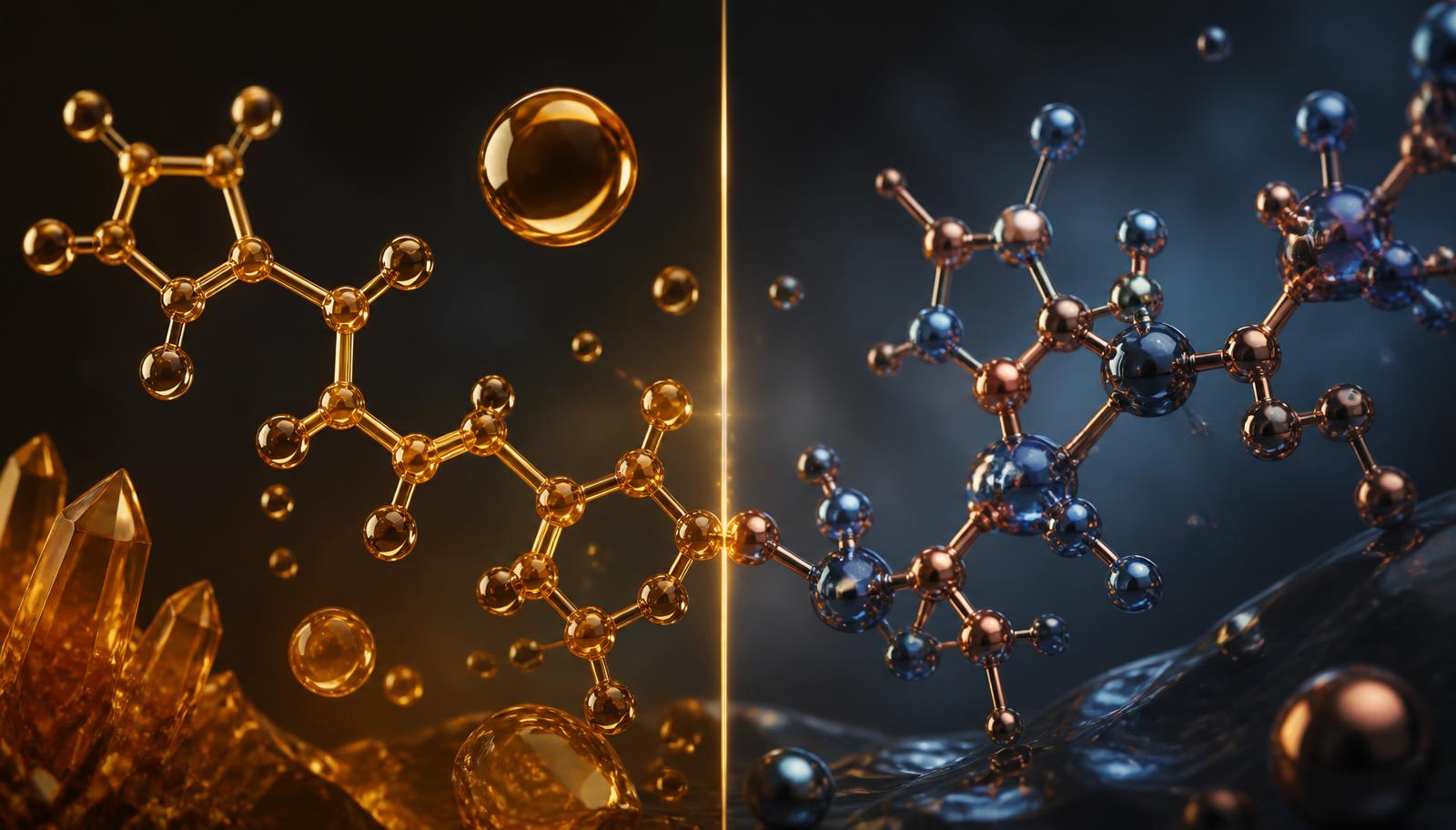
The big comparison: copper peptides vs retinol
Retinol has been the anti-aging gold standard for decades. But a new generation of actives is challenging that assumption — copper peptides (GHK-Cu) above all. Both promise fewer wrinkles, firmer skin and a younger look. So how do they actually work, and which one is right for you?
How does retinol work?
Retinol is a form of vitamin A converted into retinoic acid in the skin. It accelerates cell turnover, stimulates collagen production and reduces hyperpigmentation. The efficacy is well documented — but the cost is high:
- Irritation: redness, flaking and stinging are common for retinol beginners.
- Photosensitivity: retinol makes skin more sensitive to UV radiation.
- Restrictions: not suitable during pregnancy, for sensitive skin or rosacea.
- Ramp-up time: visible results only after 3–6 months.
How do copper peptides (GHK-Cu) work?
GHK-Cu is a naturally occurring tripeptide present in the human body that declines with age. It works on several levels at once:
- Collagen synthesis: stimulates fibroblasts directly — up to 70% more collagen production.
- Gene expression: influences over 4,000 genes toward tissue repair and rejuvenation.
- Antioxidant protection: neutralises free radicals and reduces oxidative stress.
- Wound healing: speeds cell regeneration and reduces inflammation.
- Hyaluronic acid: boosts the skin's own hyaluronic acid production.
Head to head: GHK-Cu vs retinol
| Criterion | Copper peptides (GHK-Cu) | Retinol |
|---|---|---|
| Collagen stimulation | Strong (up to +70%) | Good |
| Skin tolerance | Excellent, sensitive skin included | Frequent irritation |
| Photosensitivity | None | Increased |
| Depth of action | Cellular / genetic | Cellular |
| Visible results | From 14 days | 3–6 months |
| Layering | With almost every active | Limited |
| Pregnancy | Considered safe | Not recommended |
Can you combine copper peptides and retinol?
In principle yes — but carefully. Some dermatologists recommend using them at different times of day (retinol at night, GHK-Cu in the morning) because their optimal pH ranges differ. If your skin is sensitive or you know retinol side effects, a GHK-Cu-only routine is often the better call.
Who should choose copper peptides?
- Anyone who doesn't tolerate retinol or had bad experiences with it
- Anyone who wants faster, visible results (from 14 days)
- Anyone looking for a more holistic, biologically grounded routine
- Anyone who wants anti-aging during pregnancy or breastfeeding
- Anyone with sensitive, reactive skin or rosacea
Our verdict: Biological Dominance instead of compromise
Retinol is a proven active — but it comes with limits. GHK-Cu offers superior tolerance, faster results and a deeper biological effect. For anyone who wants anti-aging without compromise, switching to copper peptides is a decision that changes skin long term.
The LIORA GHK-Cu Korean Gold Serum combines highly concentrated GHK-Cu with SNAP-8, 24k gold and multi-molecular hyaluronic acid — for measurable results in 14 days.
Discover the LIORA GHK-Cu serumTopics
- Anti-aging
- Copper peptides
- GHK-Cu
- Retinol
- Actives
Keep reading
More articles
- Copper peptide benefits: what they actually trigger in skin
- Buying a copper peptide serum: the seven criteria that matter
- Anti-aging peptides: the four classes and what they do
EDNF25070922 combines GHK-Cu, bio microneedling, the 5-peptide complex and 24K gold in a single serum.
View the serum