Peptide glossary
Peptide
A peptide is a short chain of 2 to roughly 50 amino acids. In skincare it acts as a signalling molecule: it tells skin cells what to produce — collagen, for example.
- Also known as
- Oligopeptide, Amino acid chain
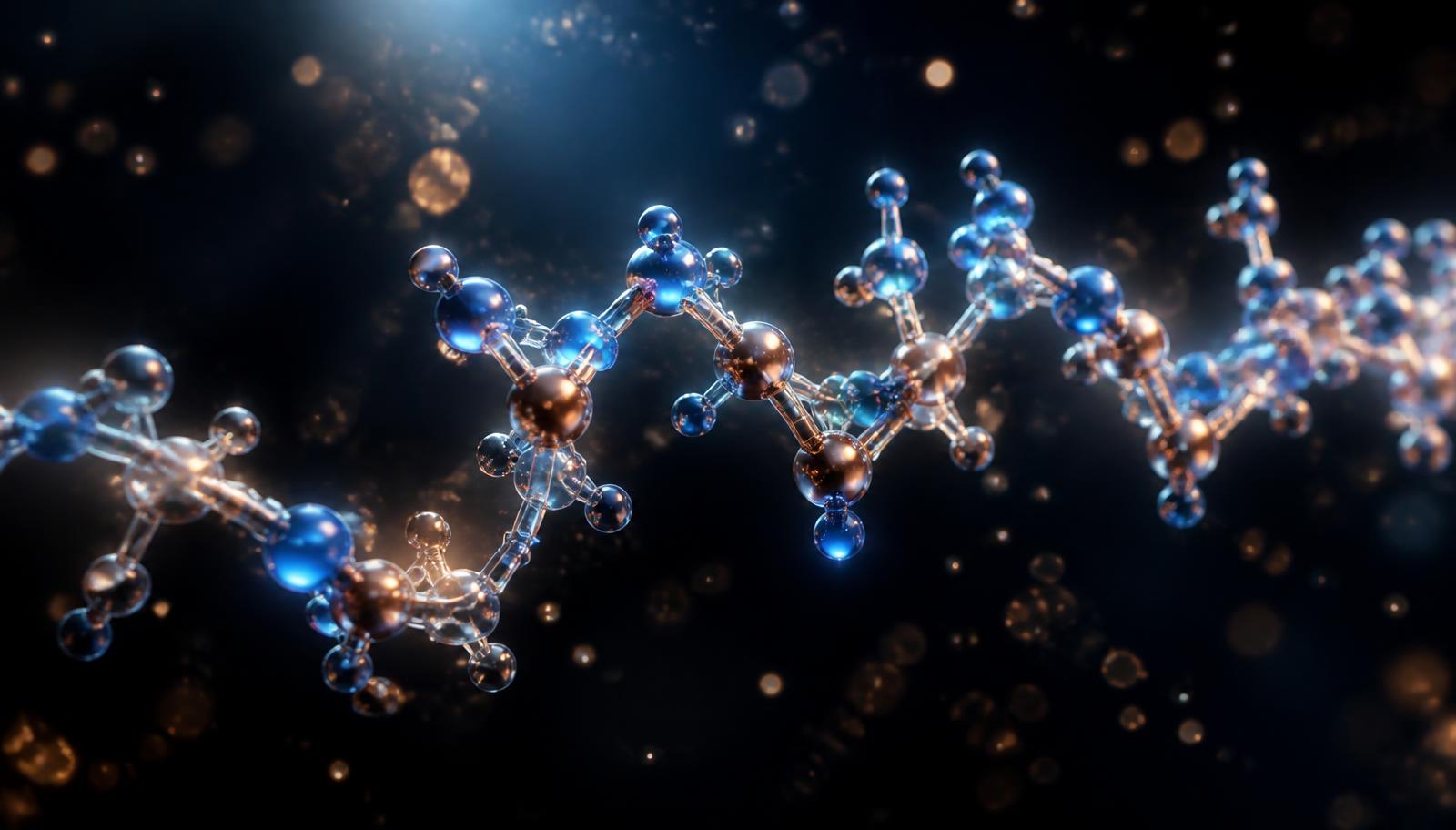
Peptide vs protein
Both are made of amino acids; the difference is length. Proteins such as collagen are too large to penetrate skin. Peptides are small enough to pass the stratum corneum and trigger a signal below it.
The four cosmetic peptide classes
- Signal peptides: stimulate collagen and elastin (GHK-Cu, Matrixyl)
- Neurotransmitter-inhibiting peptides: relax expression muscles (Argireline, SNAP-8)
- Carrier peptides: deliver trace elements such as copper into skin
- Enzyme-inhibiting peptides: slow collagen breakdown
How to spot an effective peptide serum
The peptide appears in the upper third of the INCI list, the formula sits at a pH that keeps it stable, and the packaging is light-protected. Peptides reward consistency: 8 to 12 weeks of daily use.
All of it in one formula
EDNF25070922 combines GHK-Cu, bio microneedling, the 5-peptide complex and 24K gold in a single serum.
View the serumFrequently asked questions
- What is a peptide in simple terms?
- A peptide is a short chain of amino acids. On skin it works like a message to the cells: build more collagen, repair damage, relax the muscle.
- Are peptides better than retinol?
- Peptides are far better tolerated and cause no photosensitivity; retinol exfoliates more aggressively. For sensitive skin, peptides are the safer choice.
- How long do peptides take to work?
- Texture and glow shift around day 14; measurable collagen remodelling starts from week 8.
Keep reading
Straight to the details
Jump into the buying criteria, tolerance notes and FAQs of the matching ingredient pages.